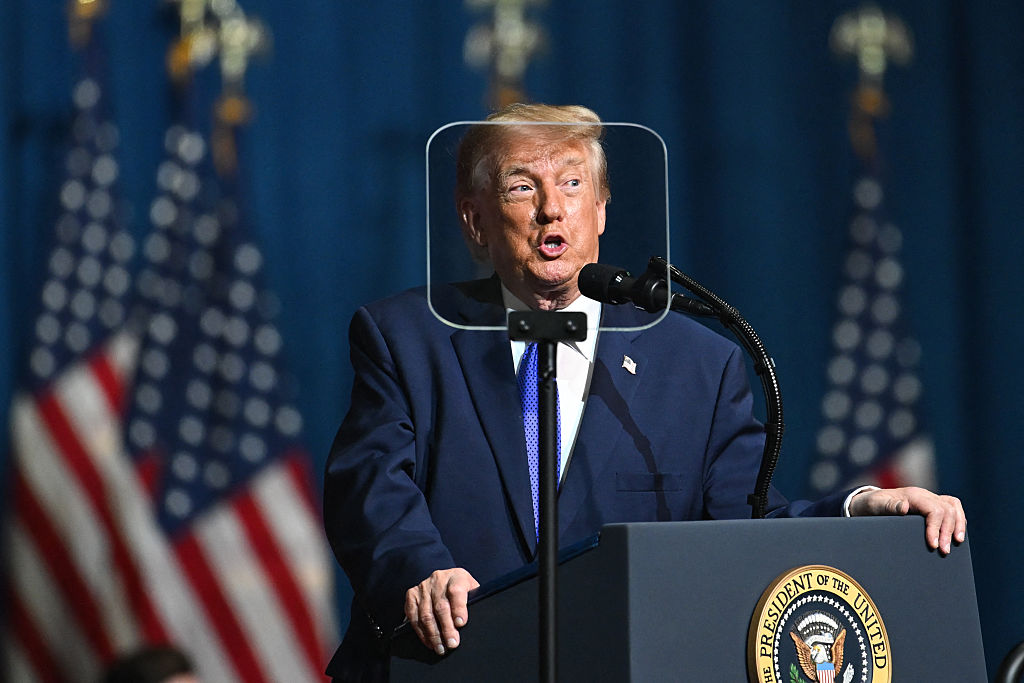
‘The midterm elections were a referendum on Trump’s handling of the economy.’ (Kent Nishimura/AFP/ Getty) ‘The midterm elections were a referendum on Trump’s handling of the economy.’ (Kent Nishimura/AFP/ Getty) Last week, Donald Trump joked that $5,000 could at most buy you a hamburger and “maybe a small dessert” at Mar-a-Lago. “It’s not a good place if you’re price conscious,” he said about his Florida beach club. It was a typically tone-deaf comment. The price of beef is a particular sore spot for Americans, since it is a key ingredient in the fast food that defines the American way of life, and its price has soared by 22% since Trump took office last year. When he was re-elected in 2024, Trump promised to bring down prices; instead, he raised them with his tariffs and his ill-fated war in Iran. The inflation rate, which had been running at 3% when he took office, is now approaching 4%. No wonder Trump’s Republican Party suffered a crushing defeat in Tuesday’s mid-term elections, in large part due to the nation’s worsening cost-of-living crisis. This week, even his own past supporters turned on him. But the cost-of-living crisis that is reshaping American politics is not confined to the US, nor is it likely to go away soon. The UK is facing similar inflationary pressures. The Office of Budget Responsibility (OBR) now expects this year’s inflation rate to average out at 3.1%, up from the March forecast of 2.3%. It expects inflation to peak next year at 3.8% before settling down for a year-long average of 3.4% — a full 1.4% above its March forecast. Much of the discussion surrounding the current inflation spike focuses on the impact of Trump’s war on the price of energy. The assumption is therefore that the high prices are temporary. The OBR assumes that by 2028, the UK inflation rate will be close to the Bank of England’s 2% target once again, making this inflation shock transitory. Ahead of the mid-term elections, Trump made much the same argument: that the price surge will prove fleeting. Unfortunately, we’ve heard this before. The word “transitory” doesn’t have great currency among economists these days. The original inflation surge of 2021 was initially waved off by central bankers as a brief aberration, but here we are, in the sixth year of above-target inflation that we keep hearing is about to come down. Other than during a brief period in 2024, inflation has not returned to the 2% target Western central banks have set for it. In fact, since last spring inflation has been on a steady upwards march — a trend we cannot attribute merely to the energy shock caused by the Iran war. In Britain, the European Union, America, Canada and Japan alike, the core inflation rate — which strips out energy and food prices to try and capture underlying pressures — has been stubbornly above target. At some point, you have to ask: when does this stop being temporary? It appears there is something more than just an energy shock driving up inflation. For a while now, some economists who study the economic impact of climate change have been predicting that the inflation rate will move permanently higher. We may now be in the foothills of what could turn out to be higher peaks. It had long been assumed that a gradual alteration in climate would over time affect the global economy, with countries such as Canada actually benefiting (from longer growing seasons) and poor tropical countries losing out. But we’re now seeing that the increased incidence and severity of extreme weather events is having a greater impact. Such events hit countries such as Canada harder, since there is so much more infrastructure and hence capital to be damaged or destroyed. In 2023, a summer of wildfires in Canada made it impossible for people to work in agriculture, forestry and mining in affected regions, while rail transportation had to be suspended, further hindering economic activity. As a result of smoke forcing citizens across large swa
También lo cubren: UnHerd.
Ver más en News Today