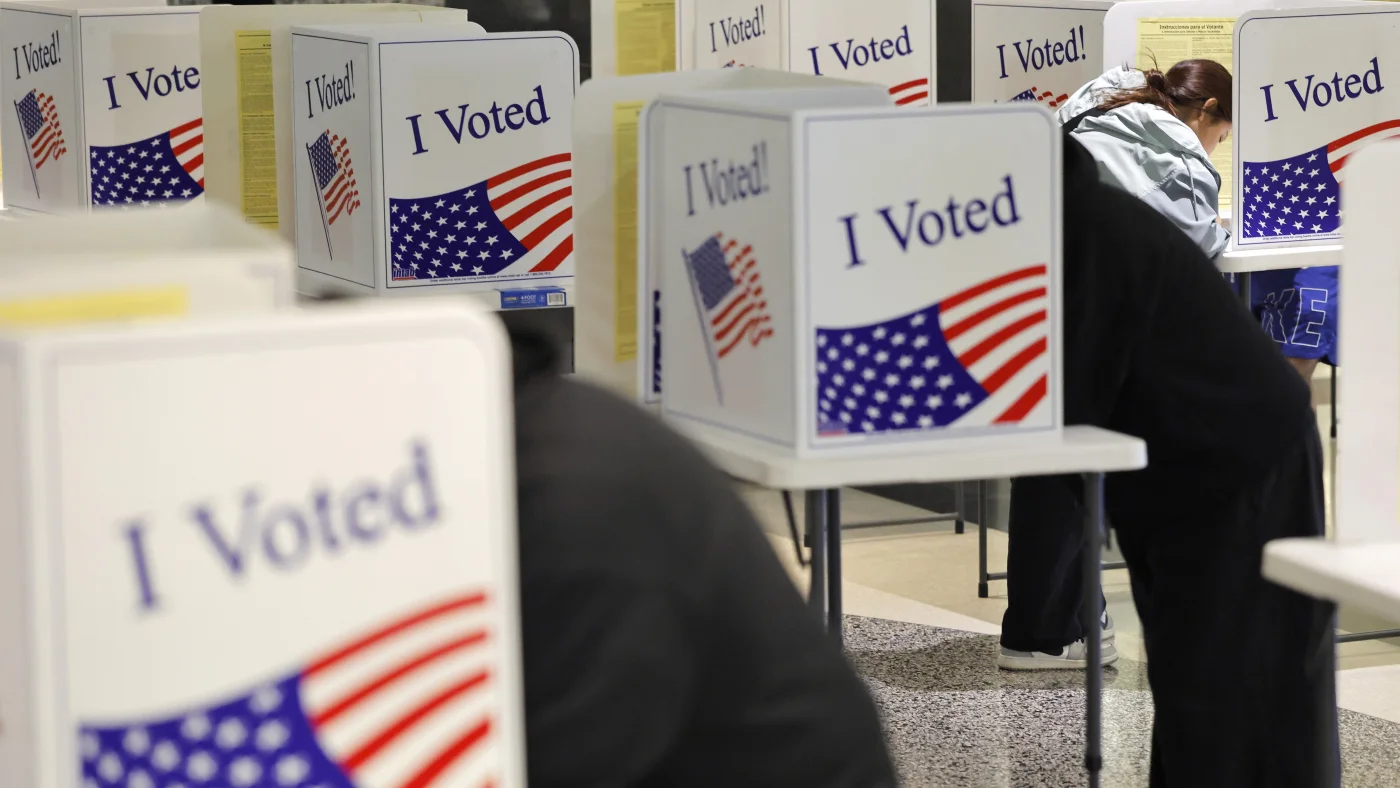
Voters weighed in on 146 statewide ballot measures across dozens of states. Mario Tama/Getty Images hide caption Tuesday's midterm elections were a huge sweep for Democrats, among other takeaways . And across 39 states — plus Washington, D.C. and the Northern Mariana Islands — voters weighed in on 146 statewide ballot measures spanning issues from taxes to transgender rights to traffic cameras to data centers and AI. Three states moved to preserve abortion access The U.S. Supreme Court overturned Roe v. Wade in 2022, leaving the legality and regulation of abortion up to each state. In subsequent elections, over a dozen states have put access to abortion on their ballots — and overwhelmingly moved to secure it. This year, four states considered abortion measures. Three passed, while Idaho voted to preserve the state's abortion ban from 2022. In Missouri, voters rejected a Republican-led amendment that would have banned abortion with few exceptions. The move affirms support for abortion just two years after voters mobilized to reject Missouri's ban, which was one of the strictest in the country. Nevada residents voted to enshrine abortion up to the point of viability in their constitution. They did so for the second election in a row , since state law requires a proposed constitutional amendment to pass twice. Virginians voted to create a "fundamental right to reproductive freedom" in their constitution. That includes the right to an abortion during the first two trimesters (and afterward in certain cases), as well as the right to contraception, fertility, postpartum care and more. Many states considered changes to how they run their elections . It was too early to call Wednesday afternoon whether voters had approved some of the more far-reaching changes, in Alaska and Arizona. Other states — including Nevada, North Carolina and Ohio — passed measures toughening identification requirements for voters, while California voted against such an effort. Several states — including Alaska, Arkansas, Kansas, South Dakota and West Virginia — approved measures reinforcing that U.S. citizenship is required to vote in their elections. Redistricting was also top of mind for voters. President Trump kicked off a redistricting race earlier this year by urging Republican-led states to redraw their districts ahead of the midterms. Republicans and Democrats in multiple states did so. But many of the districts altered to boost GOP prospects ultimately went to Democratic candidates. Missouri voters rejected a Republican-friendly congressional map , while Maryland voters passed a redistricting amendment that could pave the way for a Democrat-leaning map in 2028. Virginians passed a measure automatically restoring voting rights to anyone convicted of a felony once they have completed their sentence. Virginians also passed a constitutional amendment officially repealing its ban on gay marriage and adding language confirming that the commonwealth will recognize marriage between two adults regardless of their sex, gender or race. Virginia's ban has been moot since the Supreme Court made same-sex marriage legal nationwide in 2015, but this measure is seen as a safeguard in case Obergefell v. Hodges gets reversed (as some have feared in the wake of the court's overturning of Roe v. Wade ). Other states have made similar moves, including Colorado and California in 2024. Vermont overwhelmingly voted to add an amendment to its constitution guaranteeing equal protection under the law "race, ethnicity, sex, religion, disability, sexual orientation, gender identity, gender expression, or national origin." A number of states considered measures restricting transgender kids' access to school sports teams and gender-affirming care, with Colorado passing both . A Washington state measure to ban trans students from competing in girls' school sports was still leading on Wednesday. Arizona passed a proposal requiring schools and athletic associations to restrict student
También lo cubren: npr.org - NPR Topics: Home Page Top Stories.
Ver más en News Today