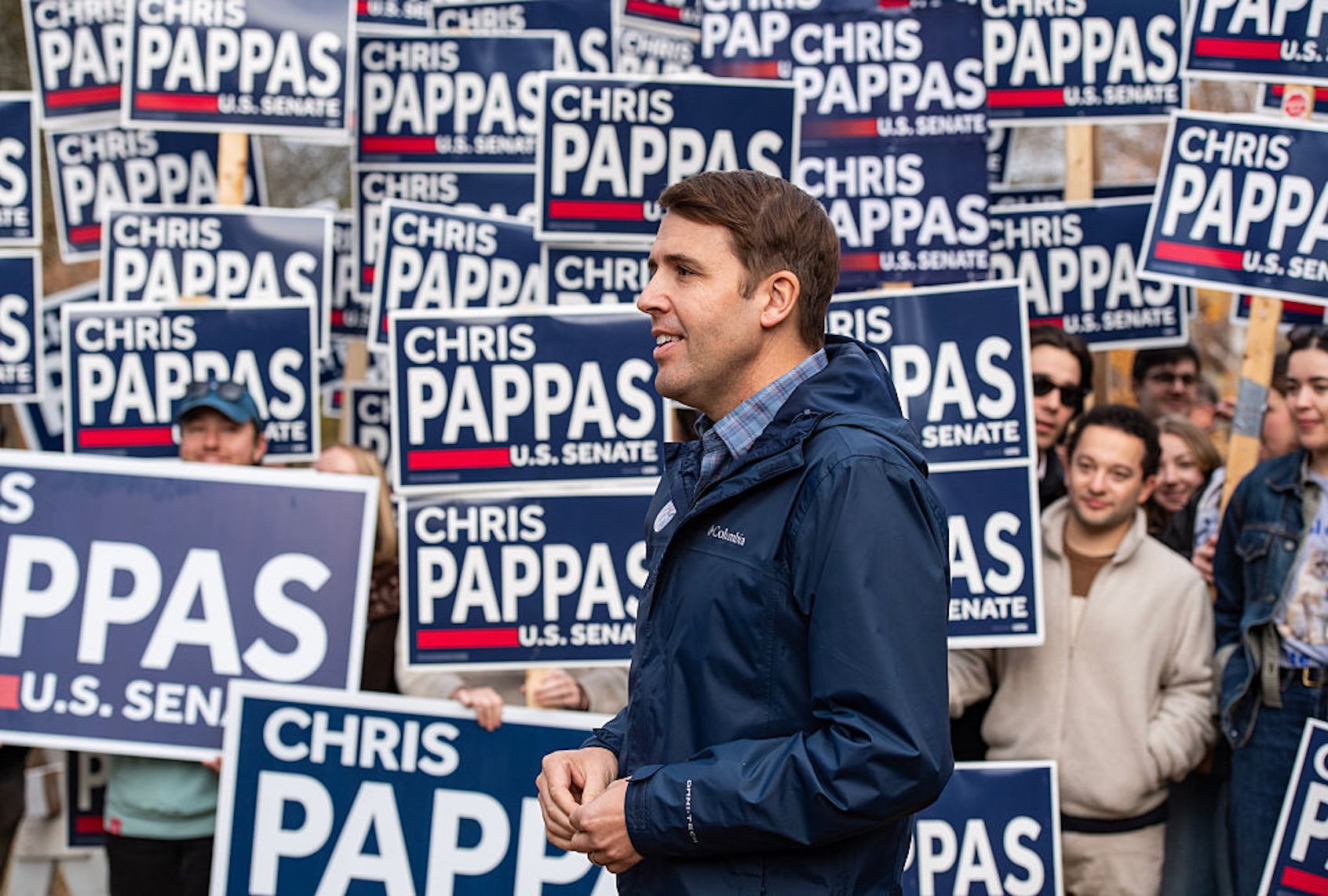
On Tuesday night, two things happened at once, and the country will be tempted to remember only one of them. The first made me go quiet at my kitchen table. Chris Pappas won election to the U.S. Senate in New Hampshire, becoming the first openly gay man ever sent to that chamber, and part of the margin that handed Democrats the Senate. In Indiana, J.D. Ford, the first openly gay person ever elected to that stateâs legislature, unseated a Republican incumbent and is headed to the House. In Texas, of all places, James Talarico beat Ken Paxton to become the first Democrat to win statewide in more than thirty years, after a campaign in which anti-LGBTQ+ messaging was reportedly Paxtonâs single largest category of advertising, and in which the vice president of the United States stood on a stage and used âgayâ as a punchline against him. Talarico is straight, and he won anyway. And on Long Island, in a district Donald Trump carried, a gay Democrat named Chris Gallant, whose private photographs were leaked against him precisely because someone believed that seeing him would be enough to end him, came within about two points of flipping a seat the forecasters had rated safely Republican. He conceded the election on Wednesday, down by roughly 6,700 votes in the closest race of the incumbent Republican Nick LaLotaâs career. In the same breath, Gallant called LaLota a brother in arms and told the district he was still their neighbor, which is to say he refused the shame he was supposed to feel from the photo leak to the very end. Whatever that is, it is not the story of a man sunk by leather. It is the story of a man who nearly won the unwinnable while carrying the exact weight that was supposed to be disqualifying. In 2026, you cannot reliably win an American election by making a manâs gayness, real or invented, the center of your campaign. Republicans tried it in Texas and lost the whole state. They tried it on Long Island and watched a red seat nearly flip. Put those results next to one another and a sentence forms that would have been unimaginable a decade ago: In 2026, you cannot reliably win an American election by making a manâs gayness, real or invented, the center of your campaign. Republicans tried it in Texas and lost the whole state. They tried it on Long Island and watched a red seat nearly flip. The oldest weapon in the drawer â the one that raised me, the one that could empty a lunch table in the 1990s â is losing its edge at the ballot box. Voters keep looking at the openly gay candidate and sending him to Washington. That is the headline, and it is real, and I am not going to let anyone talk me out of being moved by it. But here is the second thing that happened Tuesday night. In the same hours, often on the same ballots, and it is the part the rainbow-wave coverage is already rushing past. In Arizona and Nebraska, voters approved measures to bar transgender girls from girlsâ sports. In Colorado, two measures aimed at transgender young people, one on sports and one restricting certain surgical care for minors, are narrowly passing . In Washington State, an initiative to keep transgender girls out of girlsâ sports passed comfortably . The same electorate that refused to punish a Senate candidate for being gay reached down the ballot and punished trans kids for existing. This is the thing I need people to see before the celebration hardens into a story we tell ourselves. The contempt did not disappear on Tuesday. It relocated. A political movement that has learned it can no longer win by hating gay men has not given up the strategy. It has updated the target. The MAGA machine that aired the Paxton ads and laughed at Vanceâs joke is the same one now writing ballot measures about 11-year-olds, because cruelty still tests well when it is aimed at the group with the least power to answer back. Gays are simply the part of the community that got powerful enough to be left alone. I know this pattern in my
También lo cubren: Salon.com.
Ver más en News Today