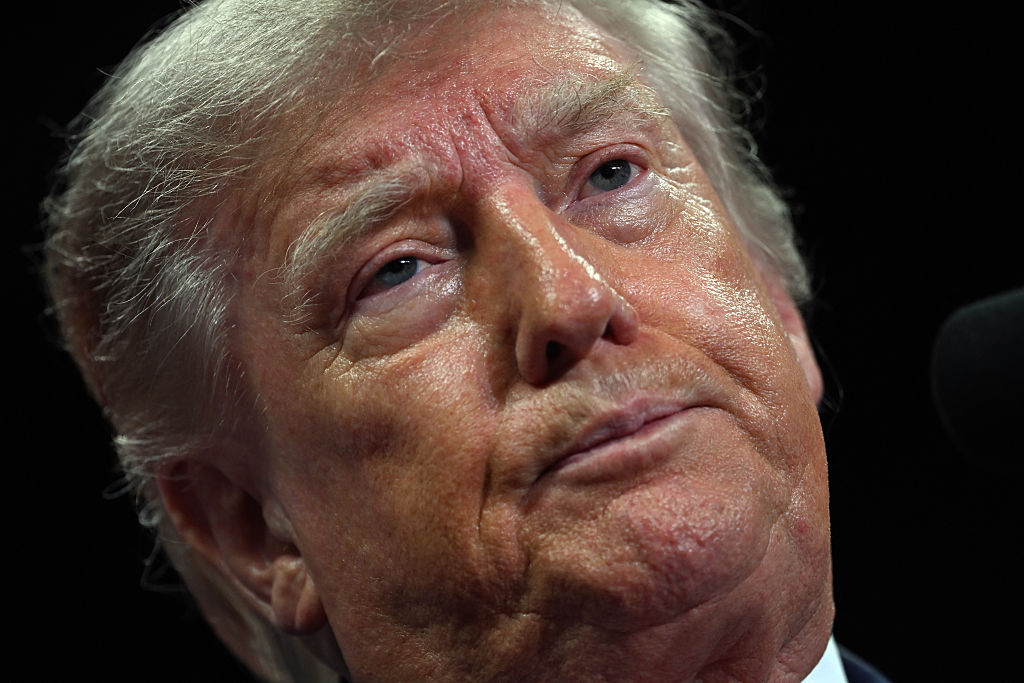
Voter polling is rarely this unambiguous…(Brendan SMIALOWSKI / AFP via Getty Images) Voter polling is rarely this unambiguous…(Brendan SMIALOWSKI / AFP via Getty Images) An all-too-common analytic error is to reduce complex problems to simplistic causes ( sancta simplicitas , “holy simplicity”, as Nietzsche mockingly referred to this tendency, particularly among religious believers). But there is also the reverse error: a deliberate seeking out of complexity when simple explanations suffice. In the wake of the Democratic blowout in Tuesday’s midterms — South Carolina, Kansas, and Texas have gone blue — beware the preachers of holy complexity bent on obfuscating the obvious: President Trump and the GOP broke their pledge of peace, launched an ill-conceived war with Iran, and thus exacerbated an affordability crisis they’d been elected to solve. To be sure, other failures marked the first two years of the Trump administration: the chaotic tariff regime, the grotesque corruption , the performative cruelty of ICE, Trump’s own descent from mere reality-TV vanity to ballroom-obsessed, Neronian caprice. But the Iran war — given both its inflationary effects and galling betrayal of one of Trump’s core pledges — looms largest. The preachers of holy complexity have good reason to avoid this bare truth. Because it indicts their entire project: a hawkish foreign policy that sees US and Israeli interests as identical or nearly so. Its advocates have for years underwritten Israeli maximalism at great cost to American global prestige and domestic well-being. After the ballot-box shellacking wrought by the Iran war, that project faces a bleak future in mainstream American politics. Voter polling — what actual voters tell pollsters upon leaving the precinct — is rarely this unambiguous. Nine of 10 voters identified the cost of living as a major concern as they headed to the polls. Only a quarter of voters described the condition of the US economy as “excellent” or “good”, while three-quarters described it as “not so good” or “poor”. And a staggering 87% of voters said they were very or somewhat concerned about the price of gas and diesel. Most telling: about 60% of voters told the Associated Press that the Iran war was a mistake . Yes, fewer identified the Iran war as a “crucial” factor than did the cost of living. Then again, the war itself is a cost-of-living issue. It’s also true that, as political economist Justin Vassallo noted in these pages , the current inflation is partly structural, having to do with the general trend toward de-globalisation. But since energy prices ramify through the economy, the Islamic Republic’s (predictable) closure of the Strait of Hormuz in response to the US-Israeli invasion has unquestionably aggravated the affordability crisis. As one senior Trump official told me recently, the administration shouldn’t have been “adding the short-term energy shock” of the Iran war to the structural inflationary trends. Or take it from outgoing Florida Gov. Ron DeSantis, who recently said : “ Some of these Republicans are saying, ‘Oh, well, the gas, don’t worry. It’s no big deal.’ . . . No, no. Listen, we’ve just got to be honest. Gas is higher. It hurts people, working-class people, and it’s higher because of the Iran conflict. That’s just the fact. If you can’t admit that to voters, then you’re gaslighting them, and they’re not going to listen to you on other things.” Even Fox News pundits — yes, them — openly lamented the war’s baleful effects on GOP campaigns Tuesday night. This matters because, ever since Jerusalem demanded that Washington join its 12-Day War, the hawks and neoconservatives insisted that a military intervention in Iran would be popular, or at least not unpopular. “There is no US downside to striking the Iranian regime,” counselled the former George W. Bush speechwriter Marc Thiessen in January, a month before the full invasion. A few weeks into the war, he cheered : “The Trump Doctrine is he
También lo cubren: UnHerd.
Ver más en News Today