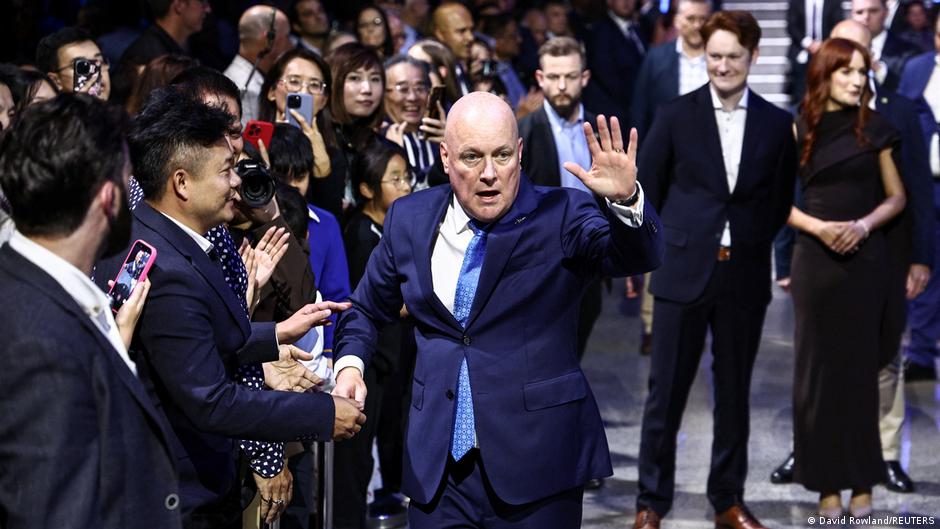
The political landscape in New Zealand remains deeply uncertain following a fiercely contested general election where the two main political forces ended up effectively deadlocked. With over ninety-five percent of the ballots processed, initial outcomes revealed that both the ruling center-right National Party and the primary opposition Labour Party secured just under thirty percent of the vote share, separated by an extremely narrow margin. Incumbent Prime Minister Christopher Luxon addressed supporters by stating that his National Party remains the largest faction in parliament and that a clear pathway exists toward establishing the next administration. Currently, the National Party governs in coalition alongside the pro-business ACT party and the right-wing populist New Zealand First movement, with preliminary data suggesting these allied forces could collectively achieve a slim majority of seats. Meanwhile, opposition leader Chris Hipkins emphasized that the country's political representatives will need to discover common ground and engage in compromise moving forward, noting that neither major political grouping is positioned to govern independently. The electoral process itself unfolded against a challenging socioeconomic backdrop marked by elevated costs for basic goods and heightened unemployment rates. Official outcomes will not be finalized until upcoming counts of special ballots, including those submitted by citizens residing overseas, are completed over the coming weeks. Historically, these specific categories of votes tend to favor left-leaning political entities and have occasionally altered preliminary standings in previous electoral cycles. Furthermore, the legislative body could expand significantly due to electoral overhang mechanisms, reflecting the complex dynamics of the nation's proportional representation framework. Fuente: DW (English) #NewZealand #Election #Politics #WorldNews #Government
También lo cubren: Latest News, The Guardian, World News.
Ver más en News Today