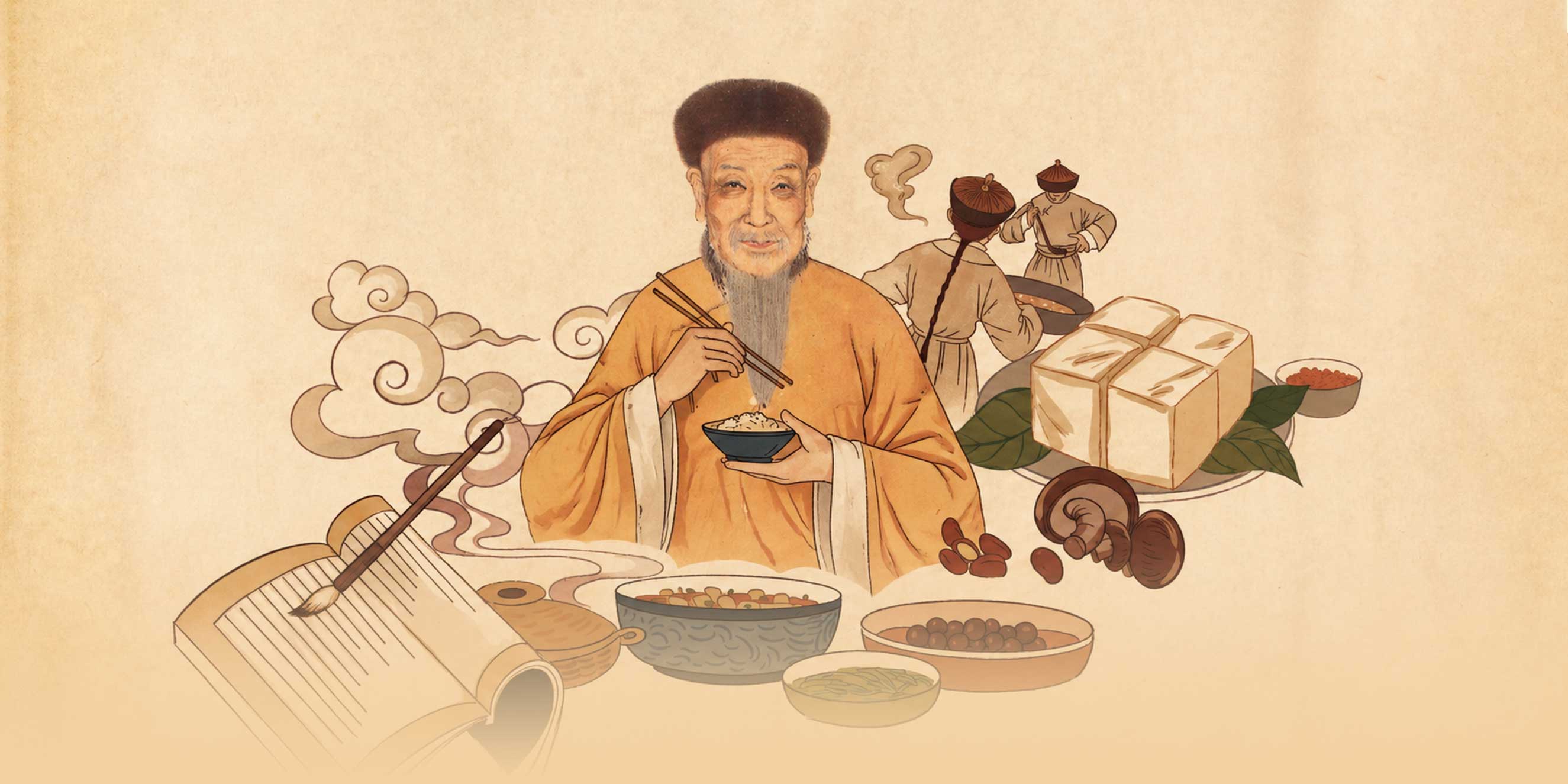
A few weeks ago, I served as a judge on a food program in China, where I met many chefs and got a close look at how they develop new dishes. I was particularly impressed by one dish: a steamed egg custard topped with a rich crab paste made from crab roe and fat. It was a combination I had never considered before. The crab paste had a delicate aroma and a rich, oily texture, while the steamed egg custard was soft and silky, perfectly balancing its richness. I was struck by the dish’s ingenuity, but it also raised a question: Would people be willing to pay for the recipe and instructions on how to make it? I put this question to one of the chefs on the program. He smiled at me as though I were a child and asked why anyone would pay for a recipe. He then let me in on an industry secret: When a restaurant discovers that a competitor has introduced a new dish, it will order it and have its own chefs taste it, analyze its ingredients, cooking techniques, and seasonings, and work out how it was made. In most cases, they can reproduce it. The chef told me he had recreated other people’s dishes and had his own copied by others. It all sounded rather cutthroat. The person who bears the cost of innovation often reaps little of the reward. In Chinese cuisine , creating a new dish is not nearly as simple as diners might imagine. Chefs must find the right ingredients, adjust proportions, experiment with different cooking temperatures, refine textures, and continually adjust based on customer feedback. Developing a successful dish can involve dozens or even hundreds of failed attempts before it is ready to serve. The time, ingredients, and labor costs of this trial-and-error process are all borne by the original creator. Yet as soon as the dish reaches the table, anyone can observe, taste, analyze, and even reproduce it. For a competitor, learning most of the techniques needed to make a dish may cost little more than the price of a meal. Even more frustrating, many of these innovators lack the resources to promote their creations. A small restaurant might be the first to develop a dish but lack the advertising budget, media exposure, or network of locations to popularize it. Meanwhile, a larger restaurant can simply copy the dish and quickly introduce it to a wider audience. Since more people encounter it there first, they may assume the larger restaurant came up with it. This suggests that the first-mover advantage does not necessarily apply in the restaurant business. Being first matters only if consumers know who created the dish and the original creator has the resources and business acumen to turn that innovation into a brand and a source of revenue. Otherwise, the creator is essentially providing free research and development while introducing consumers to a dish that benefits the entire market. The challenge of protecting intellectual property is not unique to Chinese cuisine. It affects chefs around the world. Business schools often hold up KFC’s fried chicken recipe as a classic example of a trade secret, but the company’s real competitive advantage lies in its supply chains, restaurant network, and brand value. The law does not prohibit you from reverse-engineering KFC’s fried chicken and making it yourself, or even selling it to your neighbors, provided you don’t market it as “KFC Original Recipe Chicken.” For smaller restaurants, therefore, protecting a recipe may matter less than building the brand and reputation that give it lasting commercial value. The celebrated 18th-century Chinese food writer Yuan Mei associated dishes with particular names as a way of preserving their origins. For example, in his influential cookbook “Suiyuan Shidan” (“Recipes from the Garden of Contentment”), he included dishes called “Prefect Wang’s eight-treasure tofu” and “Governor Yang’s tofu.” In this way, no matter how often later generations copied these dishes, their names remained tied to their origins. However, this naming convention has its li
Ver más en News Today