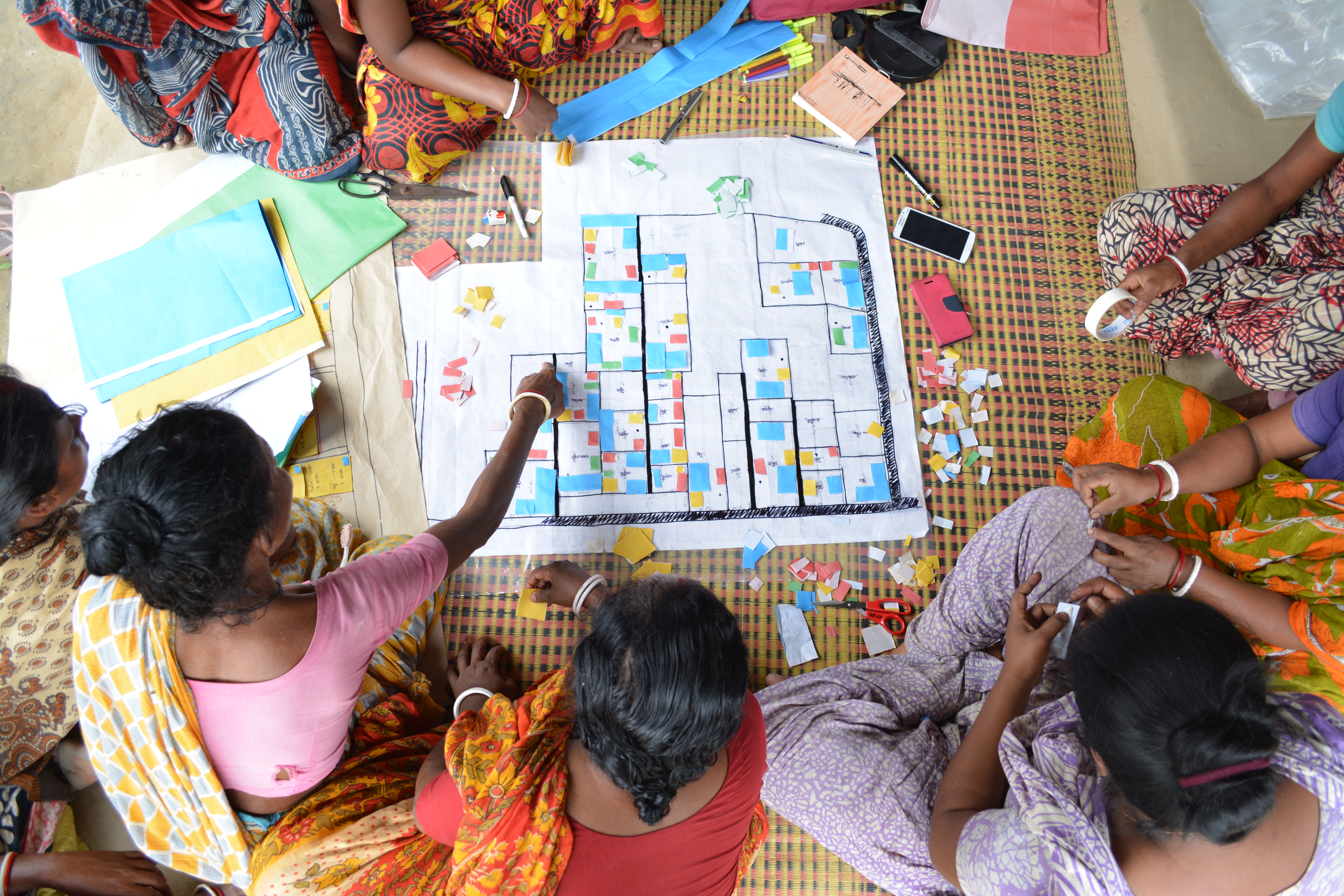
DUBAI: The Sharjah Architecture Triennial returns to the art-and-culture-driven emirate from Nov. 14, 2026, to April 14 next year with a packed, diverse and refreshingly eastwards-looking agenda. Curated by anthropologist-curator Vyjayanthi Rao, with Associate Curator Tau Tavengwa, the third edition brings together 35 participants whose practices span architecture, anthropology, urbanism, art, design, education and community initiatives. Rao, who is also a visiting professor at the Yale School of Architecture, is an anthropologist, writer and curator who focuses on displacement, memory and heritage — all themes that are represented on the busy SAT03 calendar. While the tail end of the year is known for its art and design events worldwide, SAT03 is quietly carving out a space for itself with its community-driven take. Many of the featured projects have a unique bottom-up, people-driven approach, with Rao calling on all members of the public — not just architecture professionals — to engage. “I think of architecture really as the mingling of different kinds of intelligence, whether that’s coming from the professional or from the bottom up,” she said. “I feel that that’s what ends up happening in all of the biennials and triennials … it’s like it’s speaking to a preset audience.” Rao acknowledged that purposeful design does not always start at the state level, but is often created by residents in communities who are simply seeking to connect with, or care for, their neighbors. “There is so much happening in the Gulf that’s beyond the spectacular.” She added that architect and scholar Mabel Wilson pointed out that one should “make a distinction” between the word civic capitalized and in lower case. “You know that these networks that are being created — they may be temporary, they may be ephemeral. We in the triennial, we want to create knowledge about them.” She pointed to Sharjah-based architect Azza Aboualam who is presenting “Assemblies,” a greenhouse system exploring self-sufficiency in arid environments. “Her project is to build like an urban greenhouse which is in the Umm Al-Tarafa neighborhood… and it’s in a very urban neighborhood. The experiment is to see whether … this greenhouse can facilitate some form of neighborliness.” Another example of engaging the local community is a project by Great Things! with children from diverse groups in Sharjah who have constructed a temporary public structure at the triennial. A theme particularly resonant in the Gulf, and wider Middle East, is nomadism and displacement. The event explores human movement and transience both as a cultural practice — a concept that is as embedded in the Bedouin Gulf as any of its time-honored traditions — and as the result of violence. Aslihan Demirtas, Ali Cindoruk and Dilsad Aladag, from Istanbul, present a new iteration of “Tumblespace,” a moveable and adaptable structure informed by traditions of nomadism. Meanwhile, Hiba Bou Akar, Mohamad Hafeda and Nathalie Harb examine how histories of displacement in Lebanon can be echoed within mobile, shelter-like installations that incorporate materials from refugee settlements and wartime infrastructures. “We began with this question of displacement. And you know, it’s important to distinguish the different catalysts,” Rao explained of the curatorial process. She also touched on her desire to factor in the immigrants who live in the Gulf. In the UAE, expatriates from across the world make up roughly 90 percent of the population. “What does it mean to be in the company of strangers? To be together? We should set aside this notion of belong, you know, these sorts of attachments that can get very, very negative sometimes. “Instead, if we start to imagine what it means to be together and what facilitates being together, that’s where I think people start,” she said. Bringing people together is a huge driving force for Rao, who pointed to an installation at the triennial titled “Another Empty House” that exami
También lo cubren: arabnews.com - Arab News, arabnews.com - Arab News (Arabia Saudí), arabnews.pk - Arab News Pakistan, arabnews.pk - Arab News Pakistan (Arabia Saudí).
Ver más en News Today