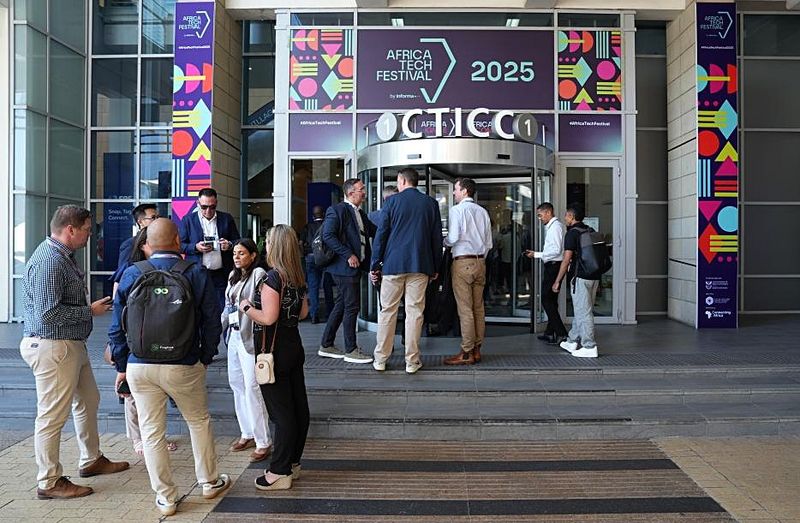
On the eve of Africa Tech Festival, the US Development Finance Corporation announced a massive capital investment into Africa’s digital arteries, setting up an interesting connectivity conversation. When governments use a combination of instruments to advance their national interests and maintain order, we call it statecraft. And it is frankly something that the United States has forgotten how to do in the current political era. But it seems as if the US is recalibrating its economic engagement across Africa, positioning development finance as a primary instrument of commercial diplomacy and strategic competition. At the centre of this push is the US International Development Finance Corporation (DFC), whose expanded balance sheet and risk tolerance signal a shift from traditional foreign aid toward commercial co-investment. Following its legislative reauthorisation at the end of 2025, the DFC received a substantial expansion in its lending and investment headroom. As Jim Kelly, DFC vice president for global business development, explained during a US Department of State briefing with African media: “DFC, as the international investment arm of the US Government [...] serves as America’s deal team and plays a central role in US economic statecraft. At the end of 2025, DFC’s mandate was reauthorised with expanded remit. We now have the ability to employ $205-billion over the next five years [...] which is a substantial increase from the $60-billion we initially had when first established in 2019... Across Africa, DFC has more than $14.5-billion in investment commitments.” Rather than spreading capital thinly across minor grant initiatives, DFC is deploying large-scale commercial investments into critical backbone infrastructure. The poster child tech transaction for this new strategy is an equity investment into the West Indian Ocean Cable Company (WIOCC), which is now DFC’s largest direct equity commitment to date. “WIOCC, as many of you may know, is a Pan-African digital infrastructure company operating across more than 30 African countries,” Kelly explained. “Our investment will help grow its fibre networks, subsea cables, data centre capacity across the continent... In addition, our investment will mobilise up to 400 million in private capital during its investment period. We’re proud to invest alongside partners including Vision International Investment Company and the African Finance Corporation.” Kelly added that DFC’s participation provided additionality by crowding in private debt. Kelly explained that DFC investments must satisfy three statutory criteria: 1. Advancing US strategic priorities abroad; 2. Delivering financial returns to American taxpayers; and 3. Generating tangible, lasting economic development in host nations. “Next week, several of my colleagues will be at Africa Tech Festival in Cape Town, and we look forward to continuing the conversations with partners there,” Kelly said. “I don’t want this to be a reactive agency; I want it to be a proactive agency. And there’s a lot of people out there in the private sector who are very smart and very experienced and very knowledgeable about all these different international investment opportunities. And I want our team to work very closely with them to help identify things that maybe we don’t necessarily see ourselves or that aren’t known in the local countries, that a solution could potentially exist. There’s just one, China-sized obstacle. While the US relies on DFC co-financing and private capital mobilisation to establish footholds, Huawei is an entrenched technological incumbent with deep public-private relationships across Africa. The Asian colossus anchors its presence by co-developing physical infrastructure alongside state entities and national telcos.
También lo cubren: Daily Maverick - Latest News.
🔗 Leer la noticia completa en dailymaverick.co.za - Daily Maverick - Latest News
Ver más en NewsToday