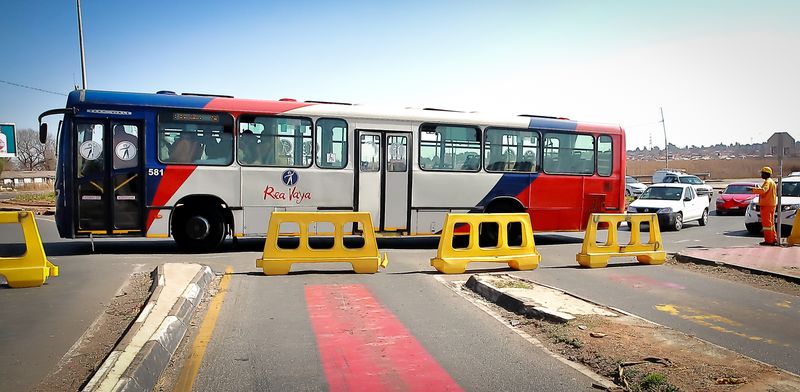
Johannesburg narrowly avoided another Rea Vaya shutdown after paying bus operators, amid unused infrastructure, weak fare revenue and mounting municipal debt. Johannesburg has invested billions of rands in infrastructure for Rea Vaya – the City’s Bus Rapid Transit System – much of which remains unused, while repeated payment delays to bus operators have disrupted services for thousands of commuters. On Monday, 16 November, as political parties negotiated the City’s next governing coalition, the municipality announced that all Rea Vaya services would be suspended from Tuesday after failing to pay the operating companies on time. Hours later, it retracted the announcement after receiving confirmation that payment had been made. The municipality did not disclose the amount paid, which operator received the money or whether all outstanding amounts had been settled. The incident follows a Daily Maverick investigation in July that revealed the Johannesburg Art Gallery Rea Vaya station, completed in October 2017, had never opened, while 12 other stations remained at 99% completion. The investigation also found buses awaiting reconfiguration, passenger numbers substantially below target and fare revenue falling far short of projections. Rea Vaya passenger figures have fallen far short of the City’s targets. According to figures cited in Daily Maverick’s July investigation, Rea Vaya recorded just 12,147 passenger trips against a target of 49,099, while fare revenue amounted to R25.3-million – only 11.4% of the target. The City had also forfeited R313-million in Public Transport Network Grant funding because of non-compliance and delays affecting Phase 1C(a) of the system. The unused infrastructure and revenue shortfalls form part of the wider challenges confronting Johannesburg’s bus rapid transit network, which remains dependent on public funding to operate. Rea Vaya is owned and overseen by the City but operated by private bus companies, including PioTrans and Litsamaiso, under contracts with the municipality. The City pays operators to provide scheduled services, covering costs such as drivers’ salaries, fuel and maintenance. Passenger fares cover only part of the operating costs. PioTrans entered business rescue in December 2023 amid financial and administrative difficulties. In January, Transport MMC Kenny Kunene questioned the continued suspension of Soweto feeder buses, claiming the municipality was paying approximately R9.2-million a month to operators despite the services not running. In April, Rea Vaya services were suspended after operators complained that the City owed them about R30-million. Business rescue practitioner Mahier Tayob said delayed payments had made it impossible for operators to cover fuel, maintenance and wages. Services resumed after an agreement was reached with the municipality. Further suspensions followed in July, when Phase 1B services were interrupted because of delayed payments to Litsamaiso, affecting around 15,000 passenger trips daily. The City attributed those delays to financial year-end budget adjustments and allocations, compounded by rising fuel costs. Monday’s near-shutdown followed the same pattern, before the City’s last-minute U-turn. Earlier this year, Rea Vaya spokesperson Benny Makgoga said the network carried about 15,000 to 20,000 commuters daily, using more than 200 buses and 63 stations.
También lo cubren: dailymaverick.co.za - Daily Maverick - Latest News.
Ver más en NewsToday